
Slovensky
|
Jelšava
|
| |
|
|
|
| |
| Attraction highlighting: Jelšava's castle |
|
| |
|
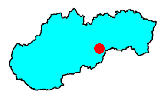
The town of Jelšava is situated in the mountain range known as Slovenské rudohorie and in the local upland known as Revúcka vrchovina region.
Historical facts about Jelšava:
|
|
Originally the town was inhabited by Slavic settlers and German miners who arrived to the area between 9th and 11th century.
Jelšava's castle was built in the mid 12th century.
The earliest written reference of Jelšava dates to 1243 when King Belo IV. published the written document about this town.
|
|
In 1427 Jelšava became the biggest town of the Gemer region.
In 1551 Jelšava was awarded with the right to organize three town markets.
After total devastation of the town, King Ferdinand I. published the statement in 1557, that the town of Jelšava is free of tax for three years.
|
|
In 1657 Jelšava was the seat of the Hungarian synod.
In 1659, King Charles VI. awarded Jelšava with several other privileges and the town became tax and duty free area.
During 18th and 19th century there were 10 different craft guilds in Jelšava which represented about 42 different crafts.
|
|
During 19th and 20th century, magnesite industry grew in the town. The first tall magnesite oven was built in 1894 and the only magnesite plant started its production in 1923. The industry has flourished until 1960s when it finall closed down.
|
|
|
|
Home page of the Town: |
|
E-mail address of the Town: |
|
|
|